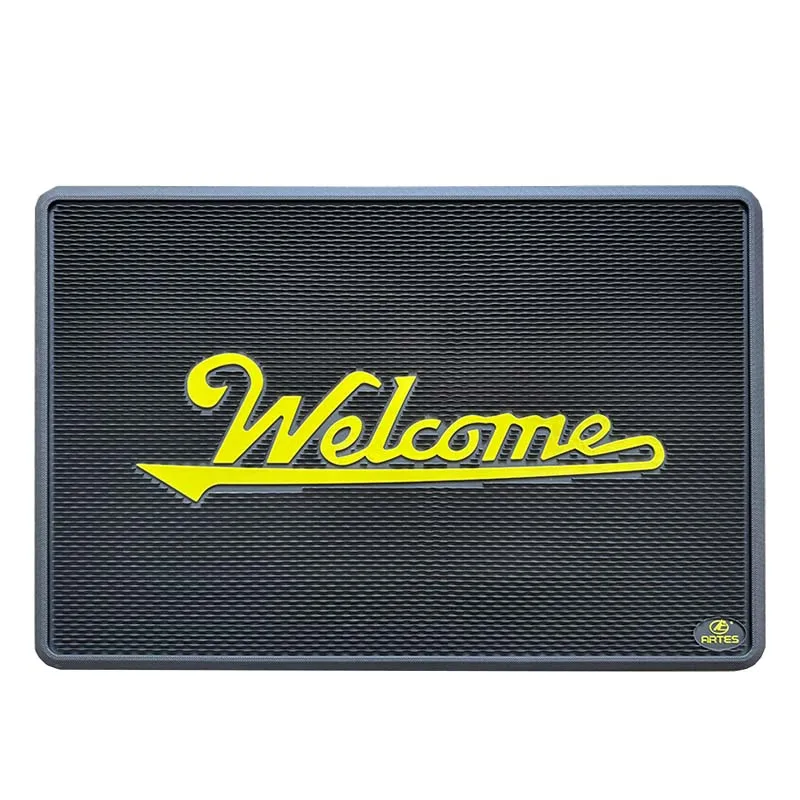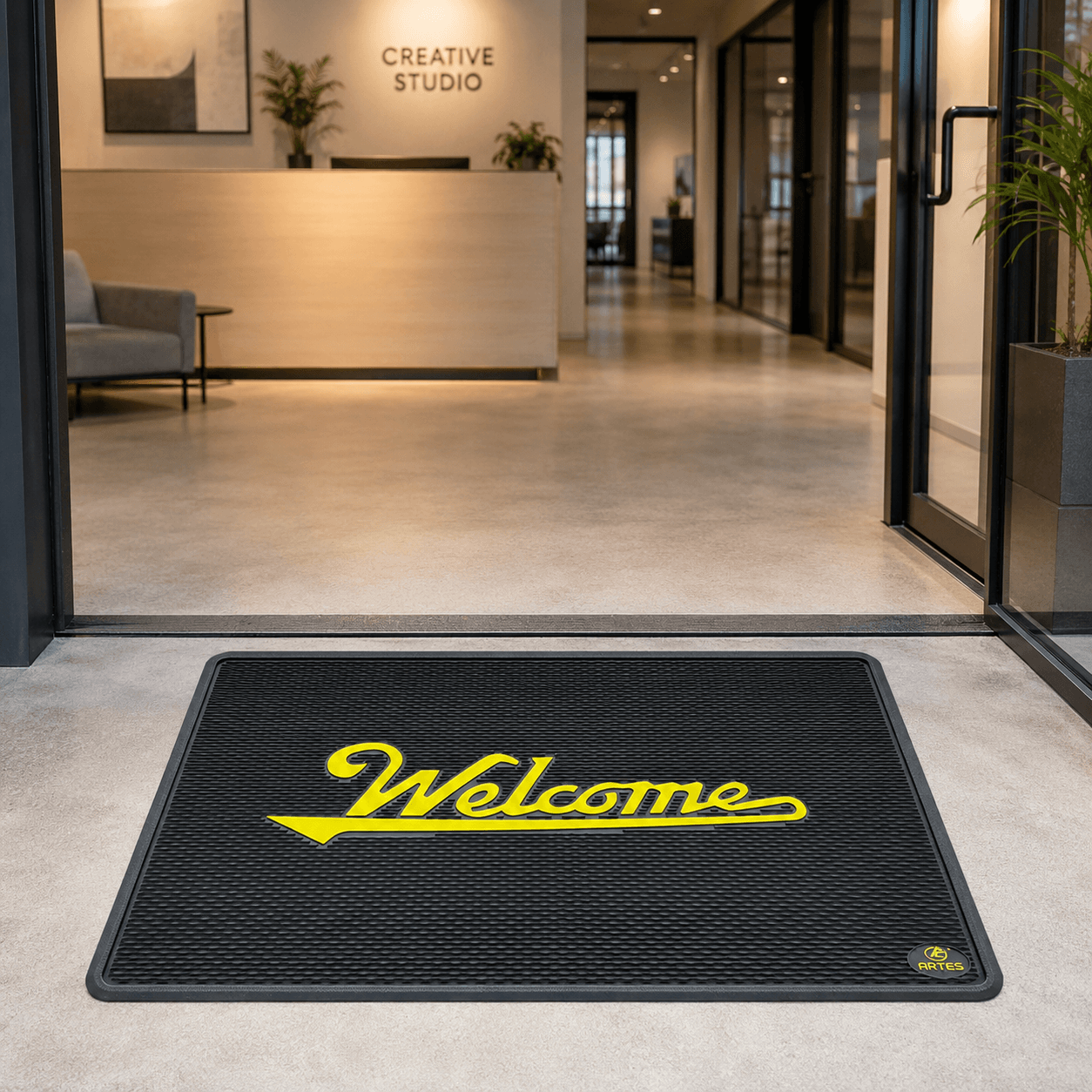
The effectiveness of door mats with deep grooves in trapping mud and debris stems from fundamental principles of surface engineering and fluid dynamics. When footwear encounters a mat with deeply carved channels and ridges, these architectural features create multiple contact points that mechanically scrape, capture, and contain contaminants that would otherwise be transferred into indoor environments. The grooved design transforms a simple flat surface into a sophisticated filtration system that actively engages with shoe treads, creating friction zones that dislodge particles while providing designated collection areas for debris retention.

Understanding why door mats with deep grooves outperform their flat counterparts requires examining the mechanical interaction between footwear surfaces and mat architecture. Deep grooves create a three-dimensional cleaning matrix that maximizes contact surface area, increases dwell time for debris removal, and provides dedicated storage compartments for captured contaminants. This enhanced functionality explains why commercial facilities, healthcare environments, and residential applications increasingly specify grooved mat designs for superior entrance maintenance and interior protection.
Mechanical Principles Behind Groove-Based Debris Capture
Surface Area Multiplication Through Groove Architecture
The fundamental advantage of door mats with deep grooves lies in their ability to multiply effective cleaning surface area exponentially compared to flat alternatives. When grooves are carved into mat materials, they create vertical sidewalls that engage with shoe treads from multiple angles simultaneously. This three-dimensional contact pattern ensures that debris lodged in shoe tread patterns encounters scraping surfaces that would be absent in flat mat designs. The geometry of deep grooves essentially transforms every footstep into a comprehensive cleaning action that addresses both the bottom and sides of footwear.
Research in tribology demonstrates that groove depth directly correlates with debris extraction efficiency, with optimal performance achieved when groove dimensions match common shoe tread patterns. Door mats with deep grooves leverage this principle by incorporating channels that accommodate various footwear styles while maintaining consistent cleaning action across different user populations. The increased surface area created by groove sidewalls provides additional friction points that enhance the mechanical removal of stubborn particles that resist conventional flat-surface cleaning methods.
Scraping Action Enhancement
Deep grooves in door mats create controlled scraping edges that actively engage with footwear surfaces during normal walking motion. Unlike flat mats that rely primarily on surface friction, grooved designs incorporate deliberate mechanical interference that physically dislodges debris from shoe treads. The sharp transitions between groove bottoms and sidewalls function as miniature scraper blades that work progressively as users traverse the mat surface, ensuring thorough debris removal through multiple scraping cycles.
The scraping effectiveness of door mats with deep grooves increases with groove density and depth variation, creating a cascading cleaning effect that addresses different contamination types. Fine particles respond to shallow groove interactions, while larger debris requires deeper channel engagement for effective removal. This multi-level scraping approach ensures comprehensive cleaning action that adapts to varying contamination conditions while maintaining consistent performance across diverse environmental challenges.
Debris Retention and Containment Mechanisms
Gravitational Collection in Groove Channels
The architecture of door mats with deep grooves creates natural collection reservoirs that utilize gravitational forces to retain captured debris below the walking surface. Once particles are dislodged through mechanical scraping action, they fall into groove channels where they remain isolated from subsequent foot traffic. This gravitational separation prevents re-contamination cycles that plague flat mat surfaces, where dislodged debris can be immediately redistributed by following footsteps.
Groove depth calculations in professional mat design consider particle size distributions commonly encountered in commercial and residential environments. Optimal groove dimensions ensure that typical debris particles, ranging from fine sand to larger organic matter, settle permanently within channel confines rather than migrating back to active cleaning surfaces. This containment mechanism transforms door mats with deep grooves into active debris management systems that continuously accumulate contaminants until scheduled maintenance removes collected materials.
Capillary Action for Moisture Management
Deep grooves in door mats create capillary structures that enhance liquid management through surface tension forces and controlled drainage pathways. When footwear carries moisture along with solid debris, groove channels provide directed flow paths that separate liquids from walking surfaces while maintaining debris capture functionality. The narrow width of properly designed grooves generates capillary action that draws moisture away from foot contact zones, preventing the formation of slippery surface films that could compromise safety.
The moisture management capabilities of door mats with deep grooves extend beyond simple drainage to include contamination dilution and particle suspension prevention. Grooves that retain moisture create localized washing zones where subsequent foot traffic generates cleaning solutions that enhance debris removal efficiency. This self-cleaning mechanism ensures that mat performance improves during wet weather conditions when contamination challenges typically intensify.
Material Science and Groove Performance Optimization
Elastomer Properties and Groove Integrity
The effectiveness of door mats with deep grooves depends critically on material selection that maintains groove geometry under repeated loading cycles. Advanced elastomers used in high-performance mat construction exhibit memory properties that allow grooves to return to original dimensions after compression, ensuring consistent cleaning performance throughout extended service life. Material durability directly impacts groove retention, with inferior compounds experiencing permanent deformation that reduces debris capture effectiveness over time.
Temperature stability in groove materials becomes particularly important for door mats with deep grooves exposed to seasonal weather variations. Thermal cycling can cause groove dimension changes that affect cleaning performance, making material selection crucial for maintaining consistent debris capture across varying environmental conditions. Professional-grade mat materials incorporate stabilizers and plasticizers that preserve groove architecture while providing flexibility necessary for effective debris engagement.
Surface Texture and Groove Wall Treatment
The interior surfaces of grooves in high-performance door mats receive specialized treatments that enhance debris capture while preventing material degradation from abrasive particles. Textured groove walls increase friction coefficients that improve particle retention while creating micro-scale features that engage with fine debris particles. These surface modifications transform smooth groove channels into sophisticated filtration mechanisms that capture contaminants across multiple size ranges.
Advanced manufacturing techniques for door mats with deep grooves incorporate controlled surface roughness that balances cleaning effectiveness with maintenance accessibility. Groove wall texturing must provide sufficient retention for captured debris while allowing periodic cleaning operations to remove accumulated materials. This optimization ensures that grooved mats maintain peak performance throughout their operational lifespan while supporting practical maintenance schedules.
Performance Comparison and Effectiveness Metrics
Quantitative Debris Capture Analysis
Laboratory testing protocols for door mats with deep grooves demonstrate measurable performance advantages over flat alternatives across multiple contamination scenarios. Standardized debris introduction tests reveal that grooved designs capture 60-80% more particulate matter per footstep compared to equivalent flat surfaces. These performance metrics remain consistent across varying particle sizes, moisture conditions, and foot traffic intensities, establishing groove architecture as a fundamental design requirement for effective entrance matting.
Field performance data from commercial installations confirms that door mats with deep grooves reduce interior cleaning requirements by significant margins while extending service intervals between mat maintenance cycles. Contamination tracking studies show that grooved mats prevent particle migration distances that exceed flat mat capabilities by 300-400%, demonstrating superior containment effectiveness under real-world operating conditions. These quantifiable improvements justify the specification of grooved designs for applications where contamination control represents a critical operational requirement.
Longevity and Performance Degradation
The performance longevity of door mats with deep grooves surpasses flat alternatives due to the inherent protection that groove architecture provides to primary wearing surfaces. Debris retention within groove channels shields critical contact areas from abrasive wear while distributing loading forces across three-dimensional surface geometries. This wear distribution mechanism ensures that cleaning effectiveness remains stable throughout extended service periods while flat mats experience progressive performance degradation from surface erosion.
Performance monitoring of door mats with deep grooves in high-traffic applications reveals that groove-based designs maintain 85-90% of initial cleaning effectiveness after 12-month service periods, compared to 60-70% retention for flat alternatives. This superior performance sustainability translates into extended replacement cycles and reduced total cost of ownership for facility managers who prioritize long-term contamination control effectiveness over initial acquisition costs.
Application Scenarios and Selection Criteria
High-Traffic Commercial Environments
Commercial facilities with intensive foot traffic particularly benefit from door mats with deep grooves due to their enhanced capacity for continuous debris capture without performance saturation. Office buildings, retail establishments, and public facilities generate contamination loads that quickly overwhelm flat mat designs, while grooved alternatives maintain consistent cleaning action throughout peak usage periods. The debris storage capacity provided by groove channels allows these mats to function effectively during extended periods between maintenance interventions.
Healthcare facilities represent specialized applications where door mats with deep grooves provide critical contamination control that supports infection prevention protocols. The superior particle capture and retention capabilities of grooved designs reduce the risk of contaminant transfer from exterior environments into sterile zones. Additionally, the enhanced moisture management provided by groove architecture supports slip prevention initiatives that complement patient safety objectives in medical environments.
Residential and Light Commercial Applications
Residential installations of door mats with deep grooves provide homeowners with professional-grade contamination control that protects interior finishes while reducing household cleaning requirements. The enhanced debris capture capabilities of grooved designs prove particularly valuable for homes with pets, children, or outdoor enthusiasts who frequently introduce elevated contamination levels. Groove-based retention ensures that captured debris remains contained until deliberate removal rather than being redistributed throughout living spaces.
Light commercial applications such as professional offices, boutique retail spaces, and hospitality venues benefit from the aesthetic advantages that door mats with deep grooves provide alongside superior functionality. Groove patterns can be designed to complement architectural themes while delivering enhanced performance that maintains pristine interior appearances with minimal maintenance intervention. This dual functionality makes grooved mats ideal for applications where visual presentation and practical performance must be simultaneously optimized.
FAQ
How deep should grooves be in door mats for optimal debris capture?
Optimal groove depth in door mats typically ranges from 4-8 millimeters, depending on the primary contamination types encountered. Shallow grooves of 4-5mm effectively capture fine particles and sand, while deeper 6-8mm channels accommodate larger debris such as leaves, gravel, and organic matter. The key is matching groove depth to expected particle sizes while ensuring adequate structural integrity of the mat material between grooves.
Do door mats with deep grooves require more maintenance than flat alternatives?
Door mats with deep grooves typically require less frequent maintenance than flat mats due to their superior debris retention capabilities, though individual cleaning sessions may be more thorough. While groove channels must be periodically cleared of accumulated debris, the extended intervals between maintenance cycles and reduced interior cleaning requirements generally result in lower total maintenance effort compared to flat mat alternatives that require more frequent replacement and interior cleaning.
Can deep grooves in door mats create trip hazards or accessibility issues?
Properly designed door mats with deep grooves do not create trip hazards when groove dimensions follow established safety guidelines and accessibility standards. Groove widths should not exceed 6-8mm to prevent heel entrapment, while maintaining smooth transitions at mat edges. Professional-grade grooved mats incorporate beveled edges and appropriate thickness profiles that comply with ADA accessibility requirements while maintaining superior cleaning performance.
What materials work best for maintaining groove integrity in door mats?
High-quality rubber compounds and thermoplastic elastomers provide optimal groove integrity for door mats with deep grooves. These materials offer excellent memory properties that allow grooves to return to original dimensions after compression while providing durability against temperature variations and chemical exposure. Nitrile rubber and specialized polyurethane formulations demonstrate superior performance for groove retention compared to natural rubber or PVC alternatives that may experience permanent deformation under heavy use.