
 EN
EN



Cat owners know the frustration of finding litter scattered across floors, under furniture, and even in neighboring rooms after their feline friends use the litter box. The question of whether a large cat litter mat with raised edges can effectively catch kicking litter is not just about convenience—it directly impacts home cleanliness, floor protection, and the time spent on daily cleanup. Understanding how these specialized mats work, what design features contribute to their effectiveness, and under what conditions they perform best helps pet owners make informed decisions about litter containment solutions that genuinely address this common household challenge.
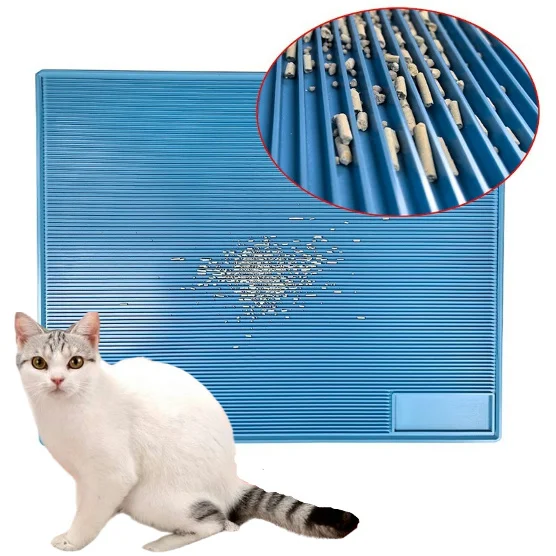
The short answer is yes—a well-designed large cat litter mat with raised edges can catch kicking litter effectively, but its success depends on several critical factors including mat size relative to your cat's behavior, edge height, surface texture, and placement strategy. Cats exhibit different litter box exit patterns, with some leaping directly out while others step carefully, and some vigorously kick litter backward as part of their natural covering instinct. A large cat litter mat with raised edges addresses these varied behaviors by creating a physical barrier that intercepts airborne and rolling litter particles while providing sufficient surface area to capture granules stuck to paws. The raised edge design transforms a passive collection surface into an active containment system that prevents litter from migrating beyond the mat boundaries, making it particularly effective for households with energetic kickers or multiple cats.
How Raised Edges Create Physical Litter Barriers
The Mechanics of Edge Height and Litter Trajectory
When cats kick litter, the granules follow predictable physics based on force, angle, and particle size. A large cat litter mat with raised edges works by intercepting this trajectory at critical points. The raised edge typically ranges from one to two inches in height, creating a vertical barrier that stops litter particles traveling horizontally at floor level. This height is strategically designed to catch most kicked litter without being so tall that cats refuse to step over it or find the mat intimidating. The edge acts as a containment wall that redirects falling litter back onto the mat surface rather than allowing it to roll across smooth flooring.
The effectiveness increases substantially when the mat extends sufficiently beyond the litter box perimeter. A standard litter box measures approximately 18 to 20 inches in length, but cats often land 12 to 24 inches away from the box exit when jumping out. A large cat litter mat with raised edges that measures at least 30 by 23 inches ensures adequate landing space for even athletic jumpers while the raised perimeter prevents captured litter from escaping during subsequent cat traffic. The raised edge design also prevents litter from being accidentally kicked back out when cats walk across the mat surface during subsequent trips to the litter box.
Material Flexibility and Edge Integrity
The material composition of the raised edge determines how well it maintains its barrier function over time. High-quality large cat litter mat with raised edges products use durable foam materials or reinforced vinyl that resists flattening under repeated paw pressure. Some cats habitually step on mat edges when entering or exiting the litter area, and inferior materials quickly lose their vertical structure, compromising containment effectiveness. Premium designs incorporate memory foam or high-density EVA material that springs back to original shape after compression, ensuring the raised edge maintains consistent height throughout the product lifespan.
The junction between the flat mat surface and raised edge requires particular engineering attention. Seamless construction or well-bonded seams prevent litter from becoming trapped in gaps where the edge meets the base, which would create hygiene issues and reduce the mat's cleanability. Additionally, the inner edge surface should feature texture or gentle slopes that guide trapped litter toward the mat center rather than creating pockets where granules accumulate permanently. This design consideration ensures that when you lift the mat for cleaning, litter flows freely rather than remaining stuck in edge crevices.
Corner Design and Complete Perimeter Protection
The corners of a large cat litter mat with raised edges represent potential weak points where litter can escape if not properly designed. Effective mats feature continuous raised edges with rounded or reinforced corners that eliminate gaps. Sharp 90-degree corners can create small openings where determined kickers send litter through, while rounded corner transitions maintain the barrier integrity around the entire perimeter. The corner height should match or slightly exceed the straight edge height to prevent litter from finding the path of least resistance.
Some advanced designs incorporate slightly taller corners since these areas often receive concentrated litter spray when cats vigorously kick in the box. A large cat litter mat with raised edges that considers this behavioral pattern may feature corner heights of two to three inches while maintaining standard one-and-a-half-inch edges along the sides. This variable height approach maximizes containment without creating an overly fortress-like appearance that might deter some cats from using the area comfortably.
Surface Texture and Litter Capture Mechanisms
Multi-Layer Trapping Systems
Beyond the raised edges, the internal surface texture of a large cat litter mat with raised edges plays an equally important role in litter capture effectiveness. Premium mats feature dual-layer or honeycomb mesh designs where the top surface contains openings sized precisely to catch litter granules while allowing them to fall through to a collection layer below. This gravity-assisted capture means that once litter falls through the top mesh, it cannot easily be kicked back out, even if your cat walks across the mat multiple times. The openings typically measure between 6mm and 12mm, optimized for common clumping and clay litter granule sizes.
The bottom collection layer remains smooth and waterproof, serving dual purposes of gathering fallen litter and protecting your floor from moisture. When combined with raised edges, this multi-layer system creates a comprehensive containment solution where the surface texture handles paw-stuck litter while the edges manage kicked and scattered granules. Some cats are meticulous groomers who lick their paws after using the litter box, and the textured surface encourages additional litter dislodgement before they leave the mat area entirely.
Paw Cleaning Texture Patterns
The specific texture pattern on a large cat litter mat with raised edges influences how effectively it removes litter stuck between toe pads. Designs featuring raised nubs, grooves, or mesh patterns create friction that naturally dislodges granules as cats walk across the surface. The texture should be comfortable enough that cats willingly walk over it rather than jumping to avoid discomfort, yet assertive enough to provide genuine cleaning action. Soft, flexible textures work better than rigid, harsh surfaces that might discourage use or cause paw sensitivity issues.
Different litter types respond differently to texture patterns. Fine-grain clumping litter tends to stick more tenaciously to paw fur and requires more aggressive texture, while larger crystal or pellet litters release more easily with gentler patterns. A large cat litter mat with raised edges designed for versatility incorporates medium-depth grooves and moderately spaced nubs that handle various litter types effectively without specializing too narrowly. The texture depth typically ranges from 3mm to 6mm, providing sufficient cleaning action without creating uncomfortable pressure points on sensitive paw pads.
Waterproof Surface Properties
Litter tracking often coincides with moisture issues, particularly with cats that have accidents outside the box or those using the facilities immediately after drinking water. A large cat litter mat with raised edges must feature waterproof or water-resistant surface properties to prevent urine from seeping through to the floor below. This protection becomes especially critical when the raised edges contain liquid within the mat perimeter, preventing it from spreading across surrounding floors. Premium materials like EVA foam, PVC, or treated vinyl provide complete impermeability while maintaining flexibility and comfort.
The waterproof nature also facilitates easier cleaning since the entire mat can be rinsed without concern for water damage or material degradation. The raised edge design actually enhances cleaning convenience by creating a shallow basin effect—you can spray or pour water onto the mat surface, agitate to loosen stuck litter, and then pour the dirty water out over the edge into a sink or outdoor drain. This cleaning advantage makes maintaining hygiene standards more practical for busy pet owners who need efficient solutions rather than time-consuming maintenance routines.
Sizing Considerations and Placement Strategies
Measuring for Adequate Coverage Area
The large aspect of a large cat litter mat with raised edges directly correlates to effectiveness because insufficient size simply relocates the litter problem rather than solving it. To determine appropriate sizing, observe your cat's litter box exit behavior for several days. Mark where the majority of scattered litter lands using tape or chalk, creating a perimeter outline. The mat should extend at least six inches beyond these markers on all sides to accommodate behavioral variation and ensure the raised edges sit well beyond the scatter zone.
For standard single-cat households with medium-sized cats, a large cat litter mat with raised edges measuring approximately 30 inches by 23 inches provides adequate coverage. Multi-cat households or homes with particularly vigorous kickers benefit from even larger options measuring 35 inches by 24 inches or more. The length dimension should prioritize the direction cats exit the box, typically the front opening, while width accounts for lateral scatter patterns. Remember that cats jumping from height disperse litter in wider patterns than those stepping out calmly, so athletic or anxious cats require proportionally larger mat coverage.
Strategic Placement Relative to Litter Box Position
Even the best large cat litter mat with raised edges underperforms if positioned incorrectly relative to the litter box. The mat should begin immediately at the box exit with no gap where litter can escape before cats reach the mat surface. For boxes positioned against walls, place the mat extending outward from the open side while ensuring the raised back edge sits flush against the wall to eliminate escape routes. Corner-positioned boxes require L-shaped or oversized square mats that cover both potential exit directions.
Covered litter boxes with single-entry doors create more predictable exit patterns, allowing more precise mat positioning. However, even with covered boxes, a large cat litter mat with raised edges should extend at least 18 inches from the door opening to accommodate the distance cats travel while still shaking paws and dislodging stuck litter. Open-top boxes require mats that surround at least three sides, with the longest extension on the side cats most frequently use for exit. Observing your specific cat's habits for one week provides actionable data for optimizing placement strategy.
Multiple Mat Configurations for Complex Spaces
Some household layouts or multi-box setups require creative approaches to litter containment that go beyond single-mat solutions. A large cat litter mat with raised edges can serve as the primary containment zone, supplemented by secondary runner-style mats along common traffic paths that cats use when traveling between litter areas and favorite resting spots. The raised-edge mat captures the bulk of kicked litter, while the secondary mats handle any residual tracking from incompletely cleaned paws.
For households with multiple litter boxes in the same room, consider whether individual mats for each box or one expansive large cat litter mat with raised edges covering the entire elimination area works better. Individual mats allow for easier cleaning since you can service one at a time, but they create gaps where litter escapes between mat boundaries. A single large mat eliminates these gaps but requires moving all boxes during cleaning. The raised edges become even more valuable in multi-box configurations since cats moving between boxes often kick up additional litter, and the perimeter barrier prevents this secondary scatter from reaching the rest of your home.
Maintenance Practices That Preserve Effectiveness
Daily and Weekly Cleaning Protocols
The effectiveness of a large cat litter mat with raised edges degrades rapidly without proper maintenance routines. Daily cleaning should involve lifting the mat and shaking captured litter back into the litter box or into a waste container. The raised edges make this process more efficient by containing litter during the shaking motion rather than allowing it to scatter during mat handling. For mats with dual-layer designs, open the layers and pour out the collected litter from the bottom compartment daily to prevent accumulation that reduces future capture capacity.
Weekly deep cleaning maintains both hygiene and material integrity. Rinse the entire large cat litter mat with raised edges using warm water and mild detergent, paying special attention to the raised edge inner surfaces where litter dust accumulates. Use a soft brush to clean texture grooves and mesh openings that trap fine particles. The waterproof nature of quality mats allows for thorough washing without material damage, and the raised edges actually facilitate this process by containing wash water during scrubbing. Hang the mat to dry completely before replacing it to prevent mildew growth and odor development.
Addressing Edge Wear and Material Degradation
Over months of use, even the best large cat litter mat with raised edges experiences material wear that can compromise effectiveness. The raised edges bear particular stress from repeated paw pressure and may begin to flatten or develop cracks in inferior products. Inspect edges monthly for signs of compression or material separation. Premium foam-based mats should spring back to full height after pressing firmly with your hand; if they remain compressed, the material has degraded beyond effective function and requires replacement.
The junction points between edges and the flat surface require special monitoring since these areas experience the most flexing stress. Look for delamination, cracking, or gap formation that creates litter escape routes. Some wear is inevitable, but quality products maintain structural integrity for 12 to 18 months under normal single-cat use. Multi-cat households should expect shorter lifespans proportional to traffic intensity. Rotating between two large cat litter mat with raised edges products extends overall lifespan by reducing continuous wear on any single mat while always keeping a clean, dry option available.
Seasonal and Environmental Adjustments
Environmental factors influence how effectively a large cat litter mat with raised edges performs throughout the year. Winter heating and summer humidity affect both litter characteristics and mat material properties. Dry winter air makes litter more staticky and prone to clinging to surfaces, while humid summer conditions can cause litter to clump on mat surfaces rather than falling through mesh openings. Adjust cleaning frequency seasonally—winter may require daily detailed cleaning to remove static-charged litter, while summer humidity might necessitate more frequent drying to prevent moisture-related odors.
Temperature extremes also affect the flexibility of mat materials. Some foam-based products become stiffer in cold conditions, potentially affecting the raised edge's ability to maintain shape and comfort. If your litter box area experiences significant temperature variation, select a large cat litter mat with raised edges manufactured from materials rated for wide temperature ranges. EVA foam and high-grade vinyl maintain consistent performance across temperature fluctuations better than basic PVC or thin rubber alternatives. Consider moving mats away from direct heating vents or cold exterior walls to maintain optimal material properties year-round.
Behavioral Considerations and Cat Acceptance
Introduction Strategies for Mat-Shy Cats
Some cats initially resist using areas with new textures or raised boundaries, potentially undermining the effectiveness of even the best large cat litter mat with raised edges. Gradual introduction helps ensure acceptance. Begin by placing the mat near but not directly in front of the litter box, allowing your cat to investigate and walk across it voluntarily without feeling forced. After several days of familiarization, move the mat to its intended position when your cat is not actively using the litter area to avoid startling them during vulnerable bathroom moments.
The raised edge height matters significantly for acceptance. While taller edges provide better containment, they may intimidate cats with mobility issues, older cats with arthritis, or naturally cautious personalities. If your cat consistently avoids stepping over the raised edge and instead jumps completely over the mat, the edges may be too high for their comfort level. A large cat litter mat with raised edges featuring one-inch edges rather than two-inch versions might provide the right balance between containment and accessibility. Some products offer gradual slope entry points on one side while maintaining full-height edges on the other three sides, combining easy access with effective containment.
Multi-Cat Dynamics and Traffic Patterns
Households with multiple cats experience different litter tracking patterns than single-cat homes, requiring adjusted expectations for large cat litter mat with raised edges performance. Dominant cats may claim preferred litter boxes, forcing subordinate cats to use less desirable boxes or exit at awkward angles that bypass mat coverage areas. Observe multi-cat interactions around litter areas to ensure the mat placement accommodates the actual traffic patterns rather than assumed ideal usage.
Multiple cats also mean more frequent mat saturation—the surface texture and capture mechanisms fill with litter more quickly, reducing effectiveness between cleanings. A large cat litter mat with raised edges in a three-cat household may require twice-daily emptying to maintain peak performance, while the same mat in a single-cat home performs well with daily service. The raised edges become even more valuable in multi-cat scenarios since they prevent litter kicked up by one cat from escaping before subsequent cats cross the mat, potentially adding to the scattered mess.
Special Needs Cats and Adaptive Considerations
Senior cats, those with disabilities, or cats recovering from injuries may struggle with standard large cat litter mat with raised edges configurations. Arthritis or hip dysplasia makes stepping over even modest raised edges painful or difficult. For these cats, consider products with ramped entries or one side without a raised edge to allow barrier-free access while maintaining containment on the exit and side boundaries. The effectiveness decreases slightly with open-access sides, but capturing 70% of kicked litter remains far superior to no containment at all.
Declawed cats often exhibit increased sensitivity to texture and may avoid mats with aggressive patterns that feel uncomfortable on their altered paws. Select large cat litter mat with raised edges products featuring softer, gentler textures while relying more heavily on the edge barriers for containment rather than aggressive surface cleaning action. Blind or vision-impaired cats benefit from mats with consistent texture across the entire surface without unexpected transitions that might disorient them. The raised edges actually help these cats by providing tactile boundaries that help them orient relative to the litter box location.
FAQ
How tall should the raised edges be on a cat litter mat for maximum effectiveness?
The optimal raised edge height for a large cat litter mat with raised edges ranges between one and two inches, balancing containment effectiveness with cat comfort. Edges measuring one to one-and-a-half inches successfully capture most kicked litter while remaining low enough that cats willingly step over them without hesitation. Taller edges approaching two inches provide superior containment for particularly aggressive kickers but may deter some cats, especially seniors or those with mobility challenges. The specific ideal height depends on your individual cat's kicking intensity and physical capabilities. If your cat consistently avoids the mat or jumps completely over it to bypass the edges, reduce edge height by selecting a different product design or trimming flexible edge materials carefully.
Can raised edge mats work with lightweight crystal or pellet litters?
Yes, a large cat litter mat with raised edges works effectively with crystal and pellet litters, though the containment mechanism differs slightly from traditional clay litter. Lightweight crystal litters tend to scatter over wider areas when kicked, making the extended surface area of a large mat particularly important. The raised edges excel at stopping these far-traveling particles from escaping the mat perimeter. However, large pellets may not fall through mesh-style mat surfaces as readily as fine-grain litter, potentially requiring more frequent manual cleaning. For crystal and pellet litters, prioritize mats with solid textured surfaces rather than large mesh openings, as the texture will dislodge particles from paws while the solid surface captures all particle sizes effectively. The waterproof properties of raised edge mats also protect floors from crystal litter's tendency to track moisture.
How do I clean a large cat litter mat with raised edges without making a mess?
The raised edge design actually simplifies cleaning when you follow the proper technique. First, lift the mat carefully keeping it level to prevent litter from spilling over the edges during transport. Carry it to a trash bin, large sink, or outdoor area. For daily cleaning, hold the mat over the waste container and shake gently—the raised edges contain the litter during this process. For deeper cleaning, place the mat in a bathtub or large utility sink, spray with a handheld showerhead or hose, add mild detergent, and scrub with a soft brush. The raised edges contain the wash water like a shallow basin, preventing it from splashing onto surrounding areas. Pour the dirty water out carefully over one edge, rinse thoroughly, and hang to dry completely. Some large cat litter mat with raised edges products feature foldable designs that make them easier to transport to cleaning areas without litter spillage.
Will a raised edge mat prevent litter from getting on furniture near the litter box?
A large cat litter mat with raised edges significantly reduces litter reaching nearby furniture, though it cannot eliminate this issue entirely if cats jump directly from the litter box onto furniture without crossing the mat. The raised edges effectively contain litter that falls onto the mat surface or that cats kick while standing on the mat, preventing it from rolling or bouncing onto adjacent furniture legs or under nearby pieces. However, if your cat has a habit of leaping from the box directly onto a nearby chair or shelf, bypassing the mat entirely, you will still experience some litter transfer to furniture surfaces. To maximize furniture protection, ensure the mat is large enough that your cat must land on it when exiting the box, and position furniture at least 24 inches away from the litter area when possible. The combination of adequate mat size and strategic furniture placement, enhanced by raised edge containment, delivers the best protection results.
Table of Contents
- How Raised Edges Create Physical Litter Barriers
- Surface Texture and Litter Capture Mechanisms
- Sizing Considerations and Placement Strategies
- Maintenance Practices That Preserve Effectiveness
- Behavioral Considerations and Cat Acceptance
-
FAQ
- How tall should the raised edges be on a cat litter mat for maximum effectiveness?
- Can raised edge mats work with lightweight crystal or pellet litters?
- How do I clean a large cat litter mat with raised edges without making a mess?
- Will a raised edge mat prevent litter from getting on furniture near the litter box?