
 EN



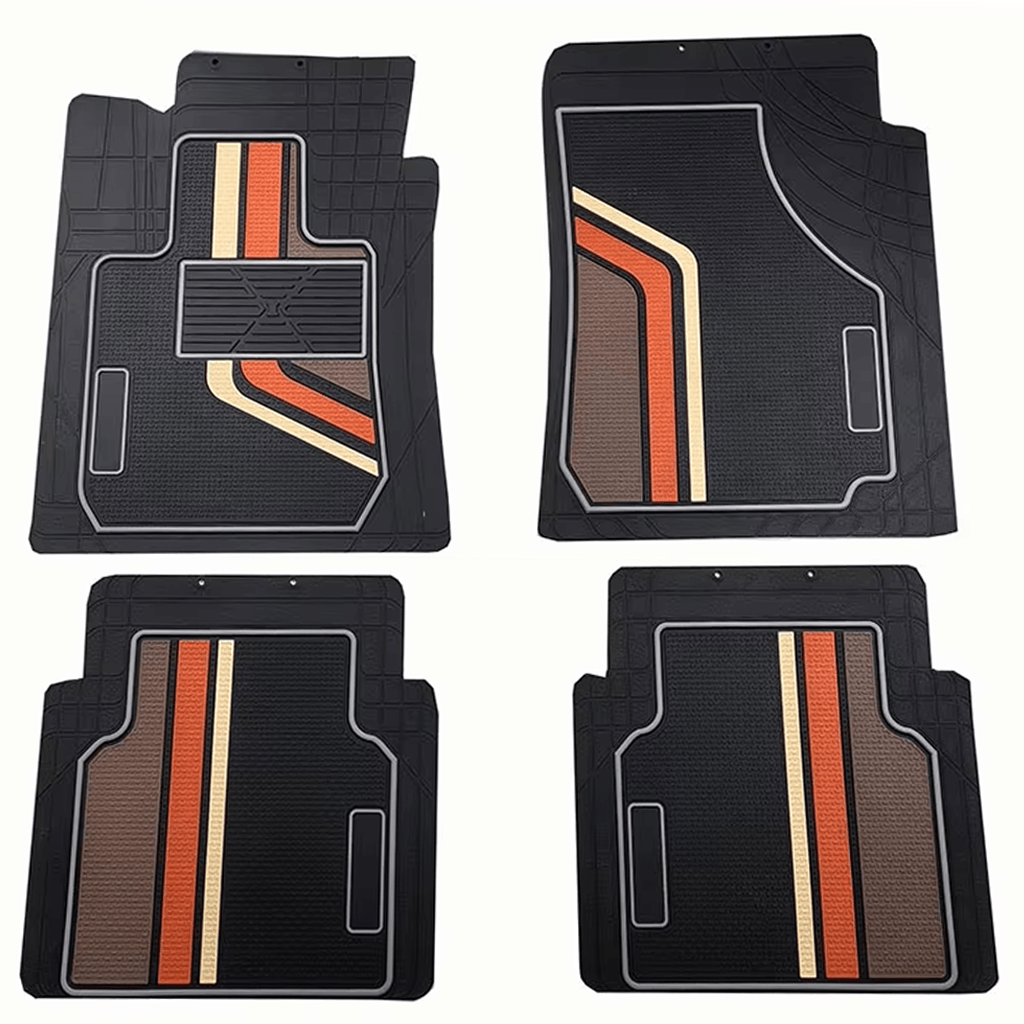
A car mat material comparison is only useful when it compares what each material fails at, because every common mat material works well on the day it is fitted. Rubber, carpet, TPE, PVC, EVA foam and leather each fail in a different way and at a different point in the ownership cycle — and that failure mode, not the marketing adjective, is what decides whether a material suits a given vehicle and driver.
This comparison is organised around failure modes rather than preferences. It covers the pairwise questions buyers ask most often — rubber versus carpet, TPE versus rubber, PVC versus TPE, leather versus TPE — and ends with the variables that usually decide the outcome regardless of polymer.
Compare by what fails first
The first thing to establish is which failure the buyer will actually complain about. A mat in a wet climate fails on water retention; a mat in a hot climate fails on odour; a mat in a work vehicle fails on wear at the heel path; a mat in a family car fails on cleaning time. The same six materials rank differently depending on which of those four failures you weight most.
Side-by-side comparison
The table compares the materials on the dimensions that customers notice, rather than on specifications that only appear on a datasheet.
| Material | Grip when wet | Odour risk | Cleaning | Typical failure | Fits best in |
|---|---|---|---|---|---|
| Rubber | Strong; channels hold water away from the shoe | Low once cured | Rinse; heavy and slow to dry | Heavy, cold and stiff in winter; colour fades | Work vehicles, trucks, fleets |
| Carpet | Weak when wet; absorbs rather than channels | High if wet repeatedly | Vacuum; stains set fast | Matting, mildew, permanent staining | Dry climates, premium interiors |
| TPE | Good; softer surface contacts the shoe | Low; formulation dependent | Wipe or rinse; dries quickly | Cost; edge stiffness varies by grade | Daily drivers, all-weather use |
| PVC | Good with texture; slick when smooth and wet | Higher if plasticiser or curing is poor | Wipe; resistant to most spills | Hardening and cracking over years | High-volume sets, utility mats |
| EVA foam | Moderate; pattern dependent | Low, unless adhesively laminated | Wipe; absorbs less than carpet | Compression under a fixed heel point | Comfort-led mats, trunk liners |
| Leather / PU | Weak; surface is smooth by design | Moderate; adhesives dominate | Wipe; creases hold dirt | Creasing, scuffing, seam failure | Show cars, dry premium markets |
Rubber versus carpet
This is the oldest comparison in the category and the answer depends almost entirely on water. Rubber wins wherever the mat will get wet, because channels move water away from the shoe and the material does not retain it. Carpet wins on comfort and interior appearance, and loses as soon as it is repeatedly soaked: it holds moisture against the floor, dries slowly, and once it has been wet several times the matting starts and the smell follows.
The practical test is the climate, not the preference. In a market with a long wet or snowy season, carpet is a maintenance product rather than a protective one.
TPE versus rubber
TPE and rubber are close enough on protection that the decision usually comes down to feel, weight and cold-weather behaviour. Rubber is heavier and stiffer, which reads as durable in a work vehicle and as clumsy in a passenger car. TPE is softer in the hand and more flexible, which helps in vehicles where the mat has to follow a contoured footwell.
The difference that is often missed is processing: TPE is thermoplastic, so consistent pattern reproduction and clean cutting are easier to hold across large volumes. Rubber's advantage is its track record in heavy-duty and winter use, where stiffness is a feature rather than a defect.
PVC versus TPE
PVC remains the cost-efficient choice for high-volume cut-and-sew programmes, and TPE is chosen when the product needs a softer feel or a lower odour profile. Mechanically they are closer than marketing suggests: both can hold a deep pattern, both are waterproof, and both depend heavily on formulation.
The difference appears over years rather than weeks. PVC plasticiser migration can harden the material and lead to cracking in a heavily used footwell; TPE generally holds flexibility better but costs more per kilogram. If the programme is price-led and the replacement cycle is short, PVC is rational. If the brand is selling comfort and longevity, TPE earns its premium.
Leather versus TPE
Leather is an appearance decision, not a protection decision. It is smooth by design, so it gives the least wet grip of any material in this table, and its failure mode — creasing and scuffing at the entry point — is visible rather than functional. TPE gives up the premium look and gains grip, cleaning ease and water handling.
Where leather appears in a mat, it is usually a face layer over a foam or rubber base, which means the comparison is really between constructions, not between leather and TPE as materials.
What actually decides the outcome
Three variables move results more than the polymer label. Thickness in the wear path decides how long the driver's heel area survives. Edge construction decides whether the mat curls within a season. Backing and clip compatibility decide whether it stays where it was fitted.
So a material comparison is a starting point, not a decision. Two mats in the same polymer can differ more on those three variables than on the material itself — which is why a specification that names only the polymer is not yet a specification.
Next step
If you are choosing between materials for a product you plan to sell, start from the failure your market complains about, then pick the material and thickness that addresses it. Our PVC roll range, TPE roll range and EVA foam sheet show the formats produced, and the car floor mats range shows finished constructions. Send the failure you need to solve to our team and we will recommend a material and thickness to test.