
 EN



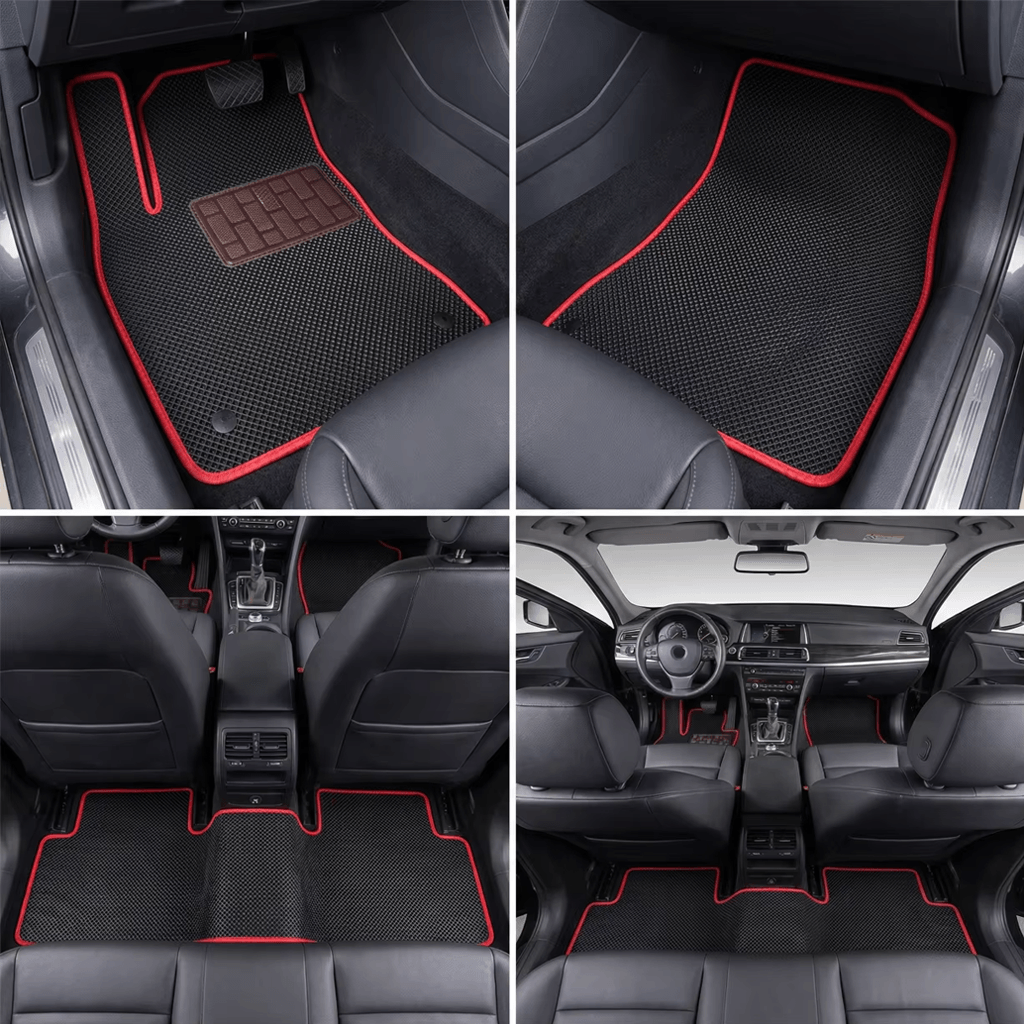
A car mats sourcing guide exists to settle five decisions before a purchase order is issued: what material the mat is made from, what thickness and pattern it uses, what format the material arrives in, how the first sample is approved, and what happens when the delivered batch does not match that sample. Everything else — catalogue browsing, price negotiation, shipping — follows from those five.
This guide is written for importers, distributors and private-label brands buying mats or mat material from a factory, not for a driver choosing a set at retail. It sets out what to put on the specification, what to demand before production, and what to check when the container arrives.
Start from the product you actually sell
The material decision should be made from the product backwards. A roll of material and a finished mat are different purchases with different failure modes, and mixing them up in a first order is the most common sourcing mistake.
| What you sell | Buy this | What you control | What you inherit |
|---|---|---|---|
| Cut-and-sew mats made in your own workshop | Roll goods (PVC, TPE) or sheet (EVA) | Thickness, pattern, cut layout, edge finish | Material consistency between rolls |
| Finished mats resold under your brand | Finished mats to your drawing | Fit, edge, logo, packaging, label | How the factory chose the polymer and backing |
| Universal-fit mats at low price points | Standard sizes, few SKUs | Size range, trimming allowance | Fit complaints you will handle at retail |
The distinction matters commercially: when you buy rolls, your margin comes from cutting efficiency and your own labour; when you buy finished mats, your margin comes from brand, packaging and channel, and the material is fixed by someone else. Choose which of those two businesses you are running before you ask for a quotation.
Write the specification sheet before the first email
A specification sheet is what turns a catalogue conversation into an order. Eight items belong on it, and each one exists because leaving it vague causes a specific argument later.
- Polymer and grade — PVC, TPE or EVA. Specify whether recycled content is allowed, because "eco" is not a specification.
- Thickness with tolerance — a nominal figure plus an accepted band, for example 6.5 mm ± 0.3 mm. A single number with no tolerance cannot be enforced.
- Pattern name and orientation — which face is up, and which direction each cut piece must follow. Pattern direction is the item most often missing from a first order.
- Roll or sheet format — nominal width, length, and the usable width after edge trim.
- Colour reference — a physical swatch or a defined colour standard. Screen colours do not survive a factory floor.
- Backing — plain, spiked, laminated, or clip-compatible. If the mat will be held by factory retention posts, send the clip drawing.
- Cutting data — 2D drawings or scaled templates, plus the nesting plan where pattern alignment matters.
- Approval route — what the golden sample is signed against and who signs it.
Item eight decides how the rest of the relationship goes. A golden sample that both sides keep, approved against those seven written items, converts every later disagreement into a comparison against a physical reference rather than a memory of an email.
Sample stage: what to confirm and in what order
Confirm material first, then dimensions, then finish, because a dimension correction is cheap and a material change is not. A practical sequence for a first order:
- Material swatch — confirm polymer, thickness, colour and pattern on an A4-size piece, not on a finished mat.
- Trimmed piece — confirm cut edge behaviour and whether the pattern still reads correctly after cutting.
- Full set — confirm fit, pattern alignment across driver, passenger and rear pieces, and clip positions.
- Packed unit — confirm polybag, label, carton print and how the set is folded. Packaging defects arrive as retail returns.
Ask for the sample to be cut from the production run you will receive, not from a display stock roll. Where the supplier cannot do that, treat the sample as indicative only and put the difference in writing.
What actually drives the price
Price per unit is set by five inputs, and knowing which one you are negotiating prevents being sold an upgrade you did not need.
Polymer type is the largest single input, followed by thickness, then pattern complexity, then packaging, then freight. Thickness affects price twice: material cost rises with weight per square metre, and shipping cost rises with the same weight. Pattern complexity affects tooling and cycle time rather than raw material. Packaging is where private-label programmes quietly lose margin — a printed carton, a branded polybag and a hang tag can cost more than the material saving from dropping 1 mm of thickness.
Freight is where roll versus finished mat changes the maths most. Rolls ship dense and flat; finished mats ship with air and with shape. If your landed cost calculation treats them the same way, one of the two products will look cheaper than it is.
Checks you can run yourself when the goods arrive
You do not need a laboratory to catch the failures that actually reach customers. Five checks, done on a sample of cartons from across the batch, cover most of the risk.
- Thickness — measure at several points on each piece with a calliper, including at the pattern peaks and at the flat edge. Record the range, not the average.
- Weight — weigh one roll or one set against the specification. A weight shortfall is the earliest warning of a substitution.
- Pattern alignment — lay a full set out and check that the pattern runs one direction and the covering pattern matches across pieces.
- Colour — compare against the approved swatch under daylight, not under warehouse lighting.
- Clip compatibility — fit the retention clip to the finished mat and check that it locks without lifting out of the carpet.
Record the results with the carton numbers they came from. A defect trend tied to a carton range is actionable; "the mats feel different" is not.
If you are writing these checks into a purchase order, the stage-by-stage version is set out in our car mat quality control guide.
Red flags in a supplier's first reply
Most problems are visible before the sample stage, in how specific the answer is. Four patterns are worth treating as warning signs.
A reply that quotes a price without asking for thickness, pattern or packing is quoting a different product than the one you intend to buy. A reply that answers every technical question with "customizable" has not committed to a range. A reply that cannot state a thickness tolerance has not measured its own output. A reply that offers no route to approve a sample in writing has no process to fall back on when the batch differs.
Next step
If you are sourcing material, the fastest way to shorten the loop is to send the specification rather than a product link: polymer, thickness, pattern, format, target volume and destination port. Our PVC floor mat roll range and TPE roll range show the formats currently produced, and the OEM service page covers how drawings and samples are handled. For finished mats, the custom fit range shows what a programme looks like when it reaches production. Send a drawing or a specification to our team and we will confirm what can be quoted from it.