
 EN
EN



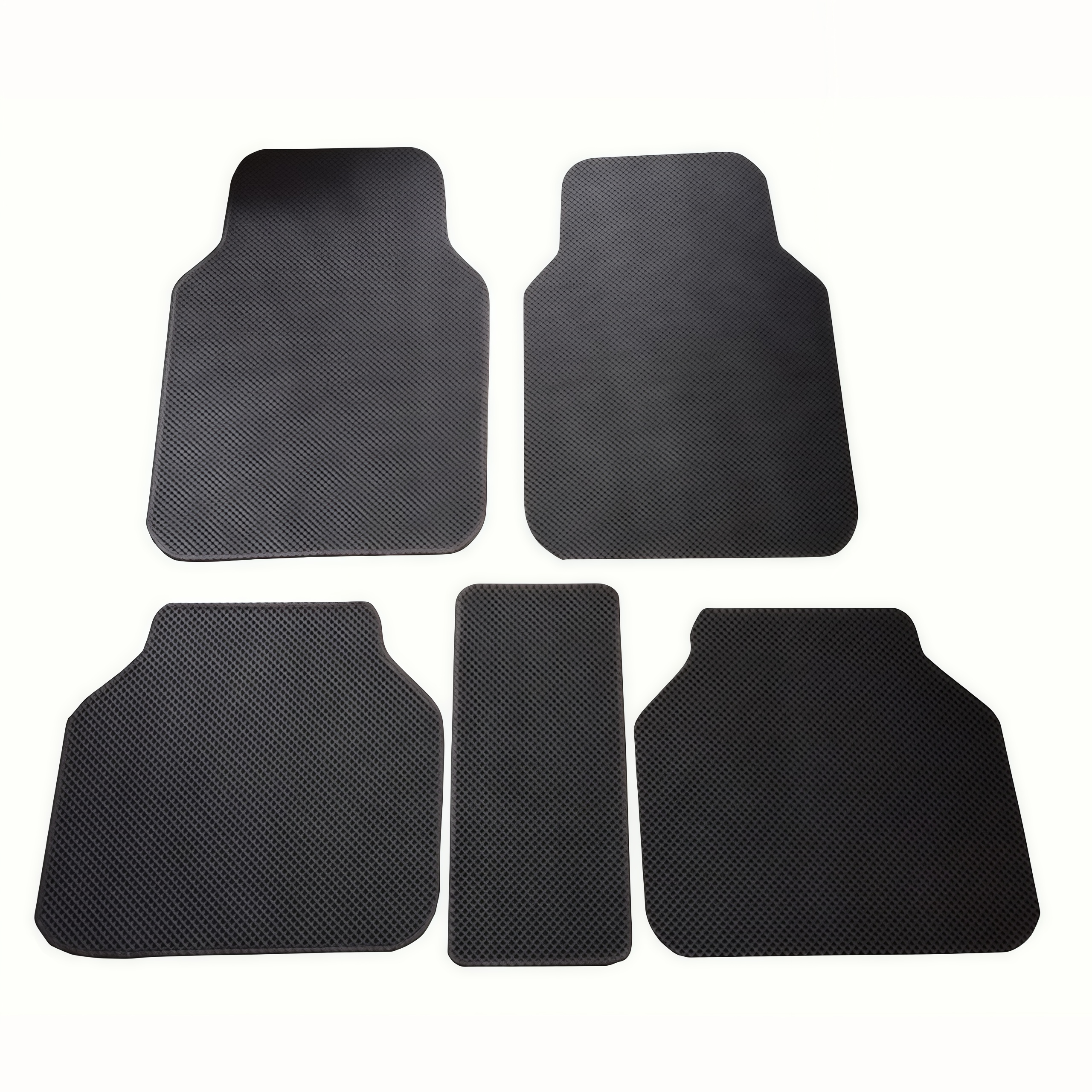
Selecting the right floor protection for your vehicle starts with understanding one of the most commonly misunderstood product categories in automotive accessories. universal car mats are designed to fit a broad range of vehicles without being custom-molded to a single model, but that does not mean every set will work equally well in every car. Size categories still exist within the universal format, and choosing the wrong one leads to poor fitment, safety concerns, and premature wear. Getting this decision right requires more than picking any mat labeled as universal.
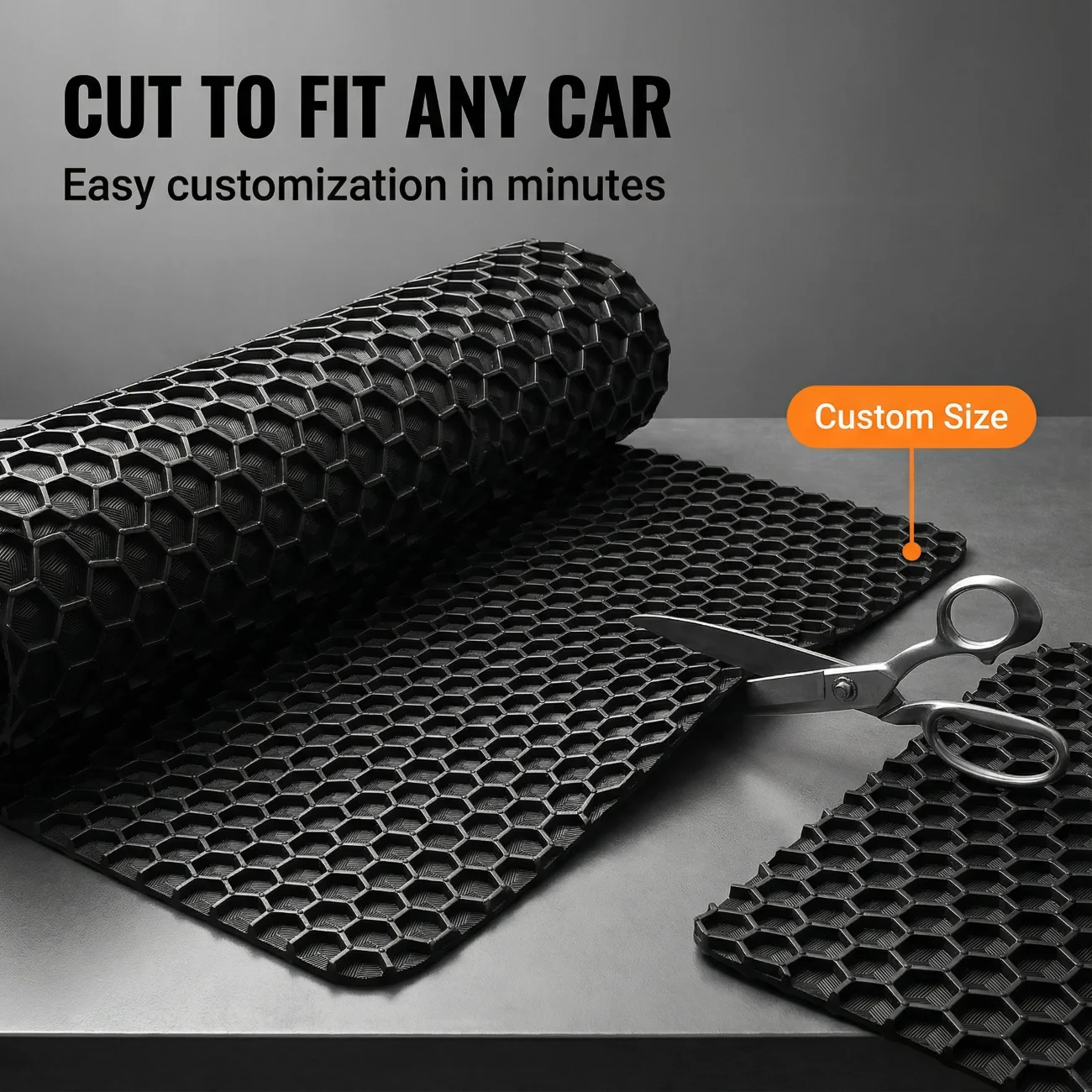
The market for universal car mats has grown significantly as manufacturers have refined their sizing systems to cover a wider spectrum of vehicles, from compact city cars to full-size SUVs and commercial vans. But with that expansion has come greater complexity for buyers who need to match their vehicle's footwell dimensions to the appropriate size tier. This guide walks through the key factors, measurement logic, and decision criteria that determine which size category of universal car mats is genuinely correct for your specific vehicle type.
Understanding How Universal Car Mat Size Categories Are Structured
The Core Logic Behind Universal Sizing Tiers
Universal car mats are not manufactured in one single dimension that somehow fits all vehicles. Instead, manufacturers group them into size tiers, typically labeled as small, medium, large, and extra-large, with some brands using lettered or numbered classifications. Each tier corresponds to a range of footwell widths, lengths, and heel pad positions that are statistically common across vehicles within a certain class. The goal is to provide enough coverage without the mat bunching, folding, or impeding pedal access.
Within each tier, the mat is designed to be trimmed, adjusted, or secured using anti-slip retaining clips so that it sits flat and stable within the footwell. This adjustability is what makes universal car mats functional across a range of models rather than a fixed vehicle. However, it also means that selecting a size tier that is too large creates trimming challenges, while selecting one that is too small leaves areas of the floor unprotected and may shift during use.
Most manufacturers publish a size guide or vehicle compatibility chart that maps their tiers to known vehicle body styles. Consulting this guide before purchasing is the most reliable first step in the selection process. The tier system exists precisely to make the process manageable without requiring a custom order for every model.
Key Dimensions You Need to Measure Before Choosing a Tier
To choose the correct size tier of universal car mats, you need to measure three primary dimensions in your vehicle's footwell: the maximum width at the widest point, the length from the firewall to the seat base, and the heel pad position relative to the mat's centerline. These three figures, taken together, allow you to match your vehicle's geometry to the correct tier in a manufacturer's sizing table.
Width measurement is often the most critical. A mat that is too wide will fold up at the sides and create a tripping hazard, while one that is too narrow will leave the carpet edges exposed to dirt, moisture, and abrasion. Most passenger cars fall into the medium tier for front mats, while trucks and large SUVs require large or extra-large sizing due to the wider and deeper footwells typical in those platforms.
The heel pad location also matters when evaluating universal car mats. The reinforced heel area must align with where your right foot naturally rests when operating the accelerator and brake. Misalignment causes uneven wear and reduces the protective benefit of the reinforcement. When reviewing a size tier, always confirm that the heel pad zone is proportioned to match your vehicle's pedal layout.
Matching Vehicle Body Type to the Right Mat Size Category
Compact and Subcompact Vehicles
Compact and subcompact vehicles, including hatchbacks, small sedans, and city cars, generally have narrower and shorter footwells than their larger counterparts. For these vehicle types, the small to medium tier of universal car mats is usually the appropriate starting point. Choosing a larger tier in hopes of better coverage typically backfires, as excess material has nowhere to lay flat and ends up creasing against the transmission tunnel or the door sill.
Because compact vehicles often have irregular footwell shapes due to space-saving engineering, the trimmability of universal car mats becomes especially valuable here. Mats made from flexible TPE or rubber compounds can be cut along marked guide lines to achieve a close fit without losing structural integrity. Always verify that the size tier you select includes trim guides appropriate for smaller footwell profiles.
Rear footwell dimensions in compact vehicles are often even smaller than the front, which means the rear set of universal car mats may need to drop another half-tier relative to the fronts. Some manufacturers address this by packaging front and rear sets separately or by providing multi-size bundles that account for this asymmetry.
Mid-Size Sedans, Crossovers, and Family SUVs
Mid-size sedans and family-oriented crossovers represent the broadest segment of vehicles on the road, and they are the primary design target for the medium-to-large tier of universal car mats. These vehicles share reasonably consistent footwell proportions, which is why most universal mat manufacturers center their design range around this vehicle class. Medium-tier mats sized for this category typically offer the best balance of coverage, heel pad positioning, and anti-slip clip compatibility.
For crossovers and light SUVs built on car platforms, the front footwells are often wider than those in traditional sedans due to the raised seating position and wider cabin architecture. In these cases, a large-tier set of universal car mats provides better side-to-side coverage without requiring aggressive trimming. It is worth checking whether the mat's lateral edges are designed with flexibility or rigidity, as stiffer mats in too-wide configurations will resist laying flat even after trimming.
Rear passenger footwells in mid-size SUVs are notably deeper and wider than in compact vehicles, and this distinction matters when ordering rear mat sets. Always measure rear footwell dimensions independently rather than assuming they scale proportionally from the front. Using incorrect rear universal car mats that slide or fold under foot traffic creates both a comfort issue and a safety concern for passengers.
Full-Size SUVs, Trucks, and Commercial Vehicles
Full-size body-on-frame SUVs, pickup trucks, and light commercial vehicles occupy the large to extra-large tier of universal car mats. These vehicles have deep, wide footwells, and in many cases, the floor surface includes complex contours around the transmission hump or under-seat storage compartments that require mat designs with built-in flexibility or raised edge walls. Flat-profile universal car mats in smaller tiers will not stay in position in these environments.
For pickup trucks, the cab configuration matters significantly. Extended-cab and crew-cab trucks have rear footwells that are quite large but also relatively shallow due to the fold-up seat design. Selecting universal car mats in the extra-large rear tier may provide more material than can be practically utilized, so reviewing the actual measurements against the manufacturer's tier specification remains essential even in this category.
Commercial vans and work vehicles often require a different approach entirely, as their front footwells may be cab-over designs with non-standard proportions. In these cases, the extra-large tier is typically required for the front, but it is also worth exploring whether the manufacturer offers dedicated commercial-size universal car mats rather than relying solely on the standard consumer tier system.
Material and Profile Considerations That Affect Size Selection
How Mat Thickness and Edge Design Influence Fitment
The material composition and profile design of universal car mats directly affect how a given size tier behaves in a specific footwell. Thicker mats made from high-density TPE or rubber compounds, such as those featuring 7mm construction, provide excellent cushioning and durability but also take up vertical space in the footwell. In vehicles with shallow floor clearance under the seat rail, a thick mat in an oversized tier can create a ramp-like slope that interferes with seat adjustment and pedal feel.
Raised-edge or 3D-profile universal car mats are designed to contain spills and debris within a tray-like structure, but this design only works when the mat's outer dimensions closely match the footwell boundary. A raised-edge mat that is too small will leave gaps where liquid can flow beneath the mat, defeating the containment purpose. A mat that is too large will have its raised edges pressing against the door sill or transmission tunnel, causing them to deform over time.
Flat-profile mats are generally more forgiving of slight size mismatches because they lack the structural edges that must align with physical boundaries. However, they still require correct width-to-length ratios to prevent bunching. When evaluating universal car mats in thicker or 3D configurations, always apply stricter tolerance to your measurement matching rather than assuming the product's inherent flexibility will compensate.
Anti-Skid and Retention Systems in Relation to Size Tiers
One of the most important functional elements of universal car mats is the anti-skid retention system on the underside. This typically consists of textured nubs, a rubberized backing surface, or a combination of grip compounds that keep the mat stationary under foot load. The effectiveness of this system depends on the mat making consistent contact with the floor surface across its entire footprint, which in turn depends on correct size selection.
Many universal car mats also include a retention clip or eyelet that hooks into a factory floor anchor point. These anchor systems are standardized across certain vehicle classes, but not universally, and the position of the eyelet on the mat must align with the anchor position in the vehicle. When selecting a size tier, check whether the eyelet is located at a position consistent with your vehicle's anchor point, as this detail alone can make a correctly sized mat perform significantly better than one that is one tier off.
If your vehicle does not have factory floor anchors, the anti-skid underside performance becomes the sole retention mechanism. In this situation, choosing a size tier that maximizes floor contact area without causing edge buckling is especially important. Oversized or undersized universal car mats that do not lay flat will rock and migrate under repeated foot pressure, creating a hazardous driving condition.
Practical Steps for Making the Final Size Decision
Using a Measurement Checklist Before Ordering
Before placing an order for universal car mats, create a brief measurement record covering the front driver footwell width, the front passenger footwell width, the front footwell length, and both rear footwell dimensions if purchasing a full set. Record these in millimeters for precision. Compare each figure against the manufacturer's published dimension range for each tier, giving priority to the width measurement as the most restrictive constraint.
If your measurements fall at the boundary between two tiers, the general guidance is to select the larger tier when the mat is trimmable and flexible, and to select the smaller tier when the mat has a fixed 3D profile that cannot be reduced. Trimmable universal car mats in a larger tier give you the option to customize the fit, while a fixed-profile mat that is marginally too large will not conform without distortion.
Pay attention to the specific shape of your footwell, particularly if your vehicle has an asymmetric transmission hump, a non-rectangular floor boundary, or pronounced floor channels. In these cases, even a correctly sized universal mat may require more careful positioning and possibly light trimming to sit flat. Some manufacturers include pre-marked cutting guides on the mat surface specifically to support this adjustment process.
Validating Fitment After Installation
Once your universal car mats arrive, the validation step is as important as the initial measurement. Place the mat in the footwell dry, without fixing it in place, and check four things: that the edges lie flat without buckling, that the heel pad is under your right foot when seated in a normal driving position, that the mat does not contact or restrict any pedal movement, and that the retention clip or eyelet aligns with the floor anchor if applicable.
If the mat fails any of these checks, address the issue before permanent installation. A mat that contacts a pedal is a safety risk and must be corrected immediately by trimming, repositioning, or exchanging for the correct tier. Universal car mats are designed to accommodate minor adjustments, but they cannot compensate for a fundamentally incorrect size tier selection without compromising their protective and safety functions.
After confirming proper placement, secure the mat using the provided retention system and test it again by applying foot pressure in all areas of natural use. The mat should remain flat and stationary. If any shifting occurs, recheck the anti-skid underside for obstructions and ensure the floor surface is clean and dry before final installation. Properly fitted universal car mats provide lasting protection and a professional appearance that degrades quickly when fitment is incorrect from the start.
FAQ
Can I use universal car mats in a vehicle that already has factory-fit mats?
Yes, but you should remove the factory mats before installing universal car mats. Stacking mats creates an uneven surface that can shift unpredictably under your feet, and the added height may interfere with pedal clearance. Universal car mats are designed to replace, not supplement, the existing floor covering.
How do I know if a universal car mat size tier is appropriate for my specific vehicle without measuring?
Most reputable manufacturers of universal car mats provide a vehicle compatibility guide or a sizing chart that maps tiers to vehicle body styles and common models. Using this guide as a starting point is acceptable, but taking actual footwell measurements remains the most reliable method, particularly for vehicles with unusual floor configurations or non-standard cabin dimensions.
Do universal car mats in larger size tiers provide better protection than smaller ones?
Not necessarily. A mat that is too large for the footwell will bunch, fold, or fail to lay flat, which reduces its protective coverage and creates hazards. Protection quality depends on correct fitment within the appropriate tier, not on choosing the largest available option. The correct size tier, properly installed, will always outperform an oversized mat that does not conform to the footwell geometry.
Are there universal car mats designed specifically for vehicles with large transmission tunnels?
Yes. Some universal car mats are engineered with a notched or angled cut-out on one side to accommodate prominent transmission tunnels common in trucks and larger SUVs. If your vehicle has a significant center hump, look for universal car mats in the appropriate large or extra-large tier that include this specific design accommodation, or select a trimmable mat that allows you to create the cutout yourself.
Table of Contents
- Understanding How Universal Car Mat Size Categories Are Structured
- Matching Vehicle Body Type to the Right Mat Size Category
- Material and Profile Considerations That Affect Size Selection
- Practical Steps for Making the Final Size Decision
-
FAQ
- Can I use universal car mats in a vehicle that already has factory-fit mats?
- How do I know if a universal car mat size tier is appropriate for my specific vehicle without measuring?
- Do universal car mats in larger size tiers provide better protection than smaller ones?
- Are there universal car mats designed specifically for vehicles with large transmission tunnels?